Bolivia's New Lithium Law: A Fiscal Reset That Still Depends on Water, Consultation and Execution
Summary
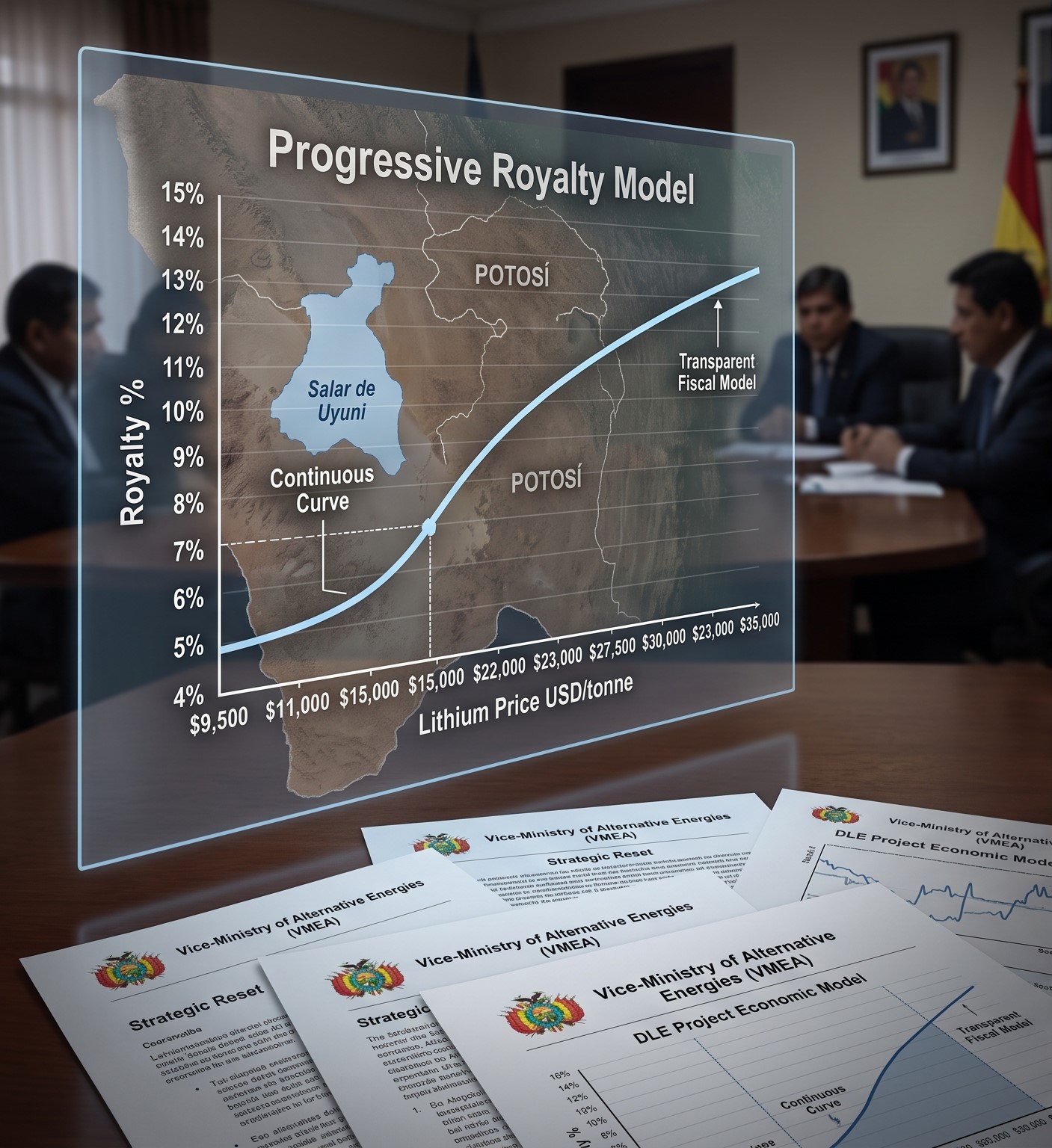
Bolivia is attempting a strategic reset of its lithium policy. The framework presented by the Vice-Ministry of Alternative Energies (VMEA) in Potosí on 12 August 2026 would replace a period of opaque and politically contested rules with a transparent, price-linked fiscal model: a progressive royalty running from 4% at a lithium price of USD 9,500 per tonne to 15% at USD 35,000, applied as a continuous curve rather than fixed bands. In principle the design is sound. It protects production through price downturns and captures greater public value when prices rise, avoiding the abrupt cliff effects of rigid tax brackets.
The underlying model, however, shows a narrow margin of safety. Built around a direct lithium extraction (DLE) project and a high country-risk discount rate, it clears the investment threshold only in the more favourable price scenarios, and a moderate construction overrun is enough to erase project value entirely. In comparative terms the package is viable but not compelling: government take sits toward the high end of the regional comparison, and modelled project value falls well below the incentive regimes available in Argentina and Brazil. Bolivia does not need to underprice its resource — it needs to reduce the non-fiscal risk that sets the discount rate in the first place.
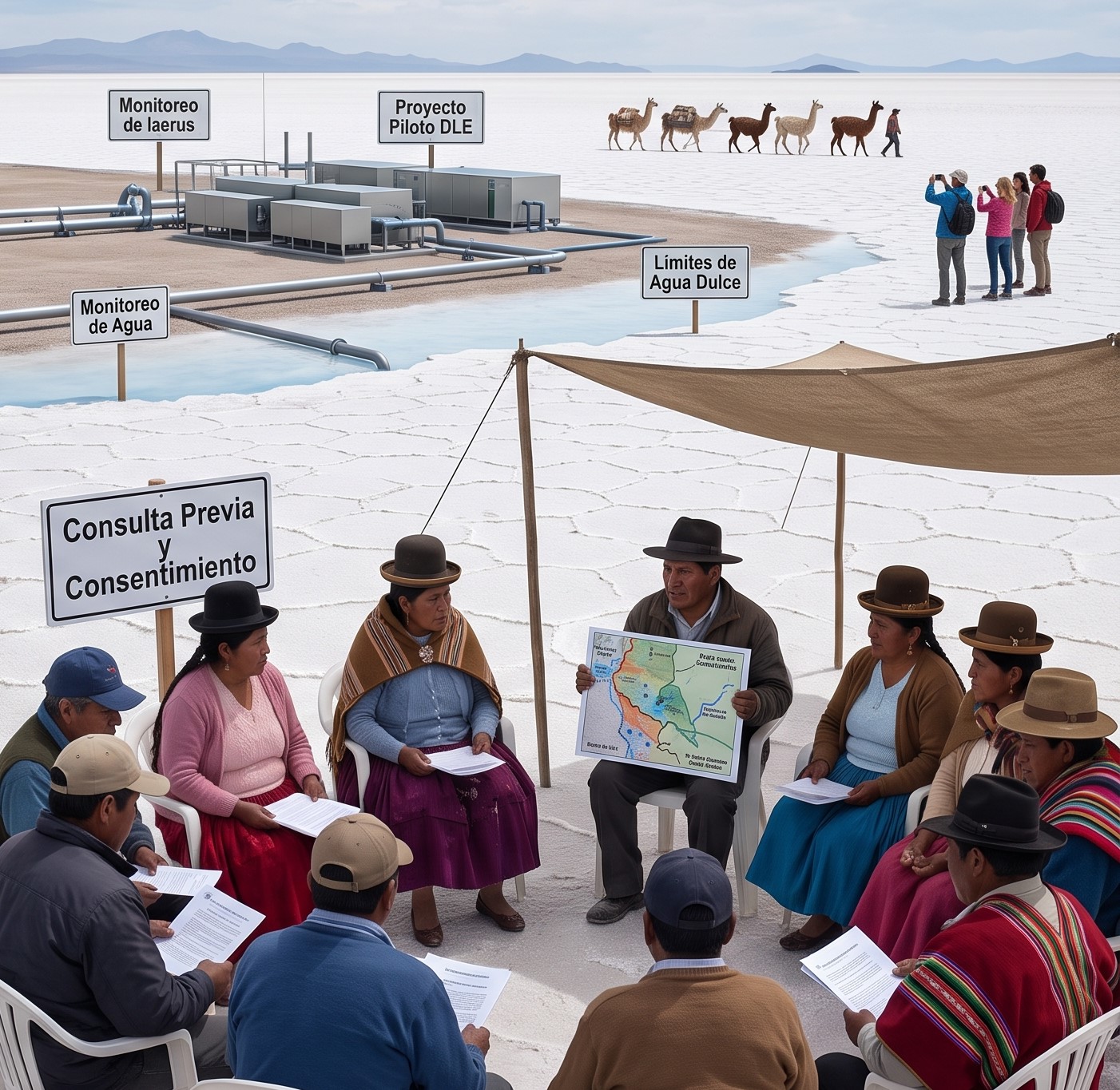
The decisive variables lie outside the royalty formula. Water is the most significant omission: no bankable Uyuni project should advance without an independent basin-scale water balance, freshwater limits, a return-brine strategy and public monitoring, since DLE's environmental performance is site- and process-specific rather than automatically superior. Community positions are not uniform either — some organisations condition their support on consultation, water protection and local benefits, while others reject industrialisation outright in favour of tourism and agro-pastoral livelihoods. Tourism should therefore be treated as a legitimate competing land use and mapped into law, not managed as a communications problem.
The timing carries strategic weight. Bolivia's participation in the February 2026 U.S. Critical Minerals Ministerial and the April 2026 bilateral memorandum on critical minerals open a real commercial and diplomatic window. Capturing it depends on converting risk perception into governable risk: clear legal hierarchy, transparent YLB governance, fiscal stability, credible dispute resolution, and consultation completed before final investment decision rather than after. Without that, the law may improve the fiscal narrative while leaving project value unchanged